
The global manufacturing sector is undergoing a profound structural renaissance, driven by an accelerating corporate demand for domestic supply chain resilience, precision aerospace assemblies, advanced clean-energy components, and complex architectural metal systems. At the absolute center of this industrial resurgence sits the sheet metal fabrication industry. Unlike highly commoditized, low-margin assembly businesses, a specialized sheet metal firm operates as a critical, high-value B2B partner capable of converting raw metal alloys into complex, structurally sound components that feed the automotive, medical, defense, and commercial HVAC infrastructure networks.
However, entering this lucrative marketplace is not a simple project to be managed with a casual job-shop mindset. Launching a successful sheet metal company represents a high-barrier, high-reward entrepreneurial undertaking that requires a sophisticated integration of master-level physical craftsmanship, intensive capital asset risk management, and rigorous technology infrastructure. To scale past a small, vulnerable local garage shop and establish an authoritative, enterprise-grade manufacturing center, you must approach the startup process with the analytical precision of an industrial engineer. Every asset choice, physical site configuration, digital security perimeter, and communication pipeline must be built to scale seamlessly from day one. This comprehensive guide provides an in-depth operational blueprint designed to guide you through the process of launching, financing, structuring, and scaling a highly profitable sheet metal fabrication and contracting firm that protects your capital and dominates the local marketplace.
Mastering Capital Equipment Procurement and Workshop Workflow Layouts
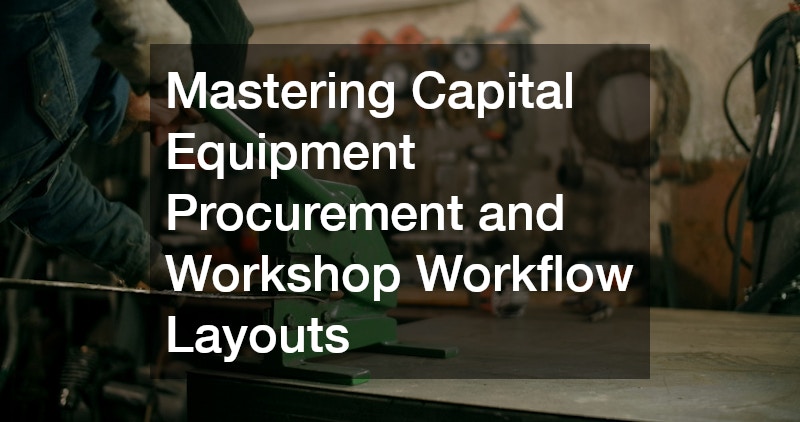
The foundation of operational profitability for any manufacturing company depends directly on the configuration and efficiency of the primary shop floor. Every minute a piece of raw metal stock spends being moved manually across an unorganized workshop floor represents a direct bleed of labor efficiency and corporate margin. Your first major industrial objective is to design a strict, linear workflow layout that guides sheet metal cleanly from the initial raw inventory delivery docks, through precise automated cutting and bending phases, and directly out into the final welding, finishing, and shipping bays.
Equipping this workflow envelope requires a calculated balance between initial asset acquisition costs and long-term production velocity. While entry-level manual tooling can seem financially attractive to a lean startup, competing in the high-stakes commercial contracting space demands immediate investment in automated multi-axis CNC press brakes and high-wattage fiber laser cutting arrays. To command maximum precision across these advanced computing systems, your recruitment strategy must focus entirely on building a highly specialized human production force. Securing the services of an elite, AWS-certified sheet metal fabricator team guarantees that your facility can accurately read complex structural engineering submittals, program difficult bend allowances, and maintain absolute dimensional tolerances across high-volume production runs. Complete this operational foundation by establishing rigid, documented quality control loops, tracking mill-test reports for every incoming batch of galvanized steel, marine-grade aluminum, and surgical stainless steel to verify metal purity and structural integrity for regulatory compliance.
- Implement a strict lean manufacturing layout: Organize your production equipment based on the classic U-shaped or linear floor configuration, ensuring raw metal stock never backtracks or congests primary transit paths.
- Prioritize high-wattage fiber laser arrays: Invest heavily in a fiber laser system with at least three to six kilowatts of output power to ensure rapid, burr-free cuts across thick structural gauge sheets without secondary mechanical finishing.
Establishing Robust Administrative Communication and Enterprise Infrastructure
While maintaining a state-of-the-art production floor is vital for executing customer deliverables, a sheet metal company cannot survive if its administrative back-office infrastructure is slow, unorganized, or disconnected from the field. In the fast-moving commercial estimation world, major general contractors and corporate procurement managers will routinely withdraw request-for-quote packages if an estimator takes more than forty-eight hours to return an integrated bid. Moving your business past personal cellular lines and unmonitored email chains is an absolute requirement to establish enterprise-level market trust.
To build an institutional communications framework that seamlessly connects your sales team, shop floor foremen, and on-site field installation technicians, you must deploy a cloud-based unified telecommunications network. Integrating an advanced, enterprise-tier business VoIP platform allows your estimators to instantly forward complex design updates, send digital blueprint adjustments via integrated messaging channels, and route urgent change orders from field construction zones straight to the cutting operator’s station. Managing these complex communication lines alongside advanced CAD/CAM nesting software arrays and enterprise resource planning (ERP) databases requires an expert level of computational architecture. To prevent your business from taking on the heavy financial burden of building a massive internal IT department, you should outsource your corporate data network management to specialized, third-party managed IT services firms. A certified external network partner will continuously monitor your database connectivity, automate system-wide cloud backups, manage enterprise software licensing, and guarantee your corporate estimators have 24/7 access to live material cost indexes.
- Deploy real-time field-to-shop data loops: Use cloud-based communication extensions on mobile tablets to let field installers send real-time site dimension updates directly to shop engineers, eliminating layout errors.
- Implement automated estimation routing structures: Program your phone and data systems to instantly route incoming client quote files to dedicated, industry-specific estimators, slashing proposal turnaround times.
Securing the Manufacturing Facility and Optimizing Data Architecture
A modern sheet metal company represents a high-concentration repository of valuable physical materials and proprietary corporate intellectual property. At any given moment, your manufacturing floor will house hundreds of thousands of dollars in raw copper sheets, specialized tooling dies, and finished precision assemblies, making your property a prime target for high-value industrial asset theft. Simultaneously, your digital server networks will house proprietary customer CAD models, proprietary nesting path algorithms, and sensitive corporate banking details that require intense algorithmic protection.
Hardening your manufacturing company against physical security breaches requires a multi-zone approach to perimeter control. Your workshop shell must be backed by a highly comprehensive, enterprise-grade commercial alarm system featuring active motion analytics, multi-spectrum infrared night-vision video arrays, dual-path cellular reporting backups, and localized remote access restrictions that log the exact timestamp of every door opening. To secure your corporate digital assets with equal intensity, you must work alongside specialized, external IT professionals. Partnering with certified IT services providers allows you to establish an institutional-grade digital defense grid, deploying advanced multi-factor authentication protocols, isolated guest networks for shop floor hardware, endpoint monitoring suites, and robust corporate firewalls that actively insulate your proprietary manufacturing code from external digital intrusions or ransomware threats.
- Enforce compartmentalized physical access cards: Program your facility’s security systems so that only authorized, certified personnel can unlock specialized materials cages, precision tool sheds, and master server rooms.
- Schedule automated digital penetration audits: Contract your digital security partners to perform quarterly network stress tests to identify and patch vulnerabilities across your estimating databases and remote access portals.
Preparing the Industrial Site and Contracting Heavy Infrastructure
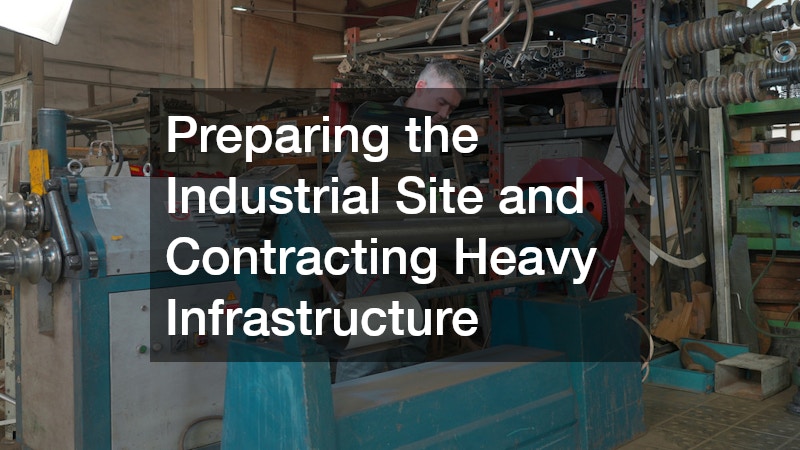
The physical infrastructure constraints of a sheet metal company are fundamentally distinct from standard commercial warehouses or light retail spaces. The sheer weight of raw steel inventory stacks, combined with the continuous, intense vibration generated by high-speed mechanical shears, high-tonnage stamping presses, and multi-axis press brakes, will quickly shatter standard commercial concrete slabs. Long before you deploy machinery to a new property, you must execute a comprehensive, heavy-duty civil engineering site preparation plan.
This deep civil engineering workflow begins by selecting a robust, industrial-zoned acreage optimized for heavy multi-axle freight traffic and deep-foundation manufacturing plants. You must partner with a fully licensed, bonded, and highly experienced local site excavation company to execute an intensive topsoil clearing, structural subgrade compaction, and topographical grading analysis. Subsurface stability is non-negotiable; your earthmoving contractors must deploy comprehensive excavation services to dig out deep, structurally sound foundation footprints, clear out subterranean rock anomalies, and cut custom drainage retention basins to protect your industrial site from flash flooding events. Once the ground layers are fully stabilized, work closely with structural engineering teams to pour custom, deep-set concrete pads heavily reinforced with thick steel rebar matrices, specifically engineered to deaden structural machinery harmonic vibrations and prevent your heavy capital assets from shifting out of absolute alignment over decades of operation.
- Execute comprehensive soil density testing: Require your civil contractors to run standard Proctor compaction tests across your graded job site to confirm the soil can support extreme structural warehouse loads without settling.
- Incorporate isolated independent machine foundations: Pour distinct, deep concrete isolation blocks separated by expansion joints directly beneath your heavy presses to absorb kinetic energy and protect neighboring laser cutters from vibration.
Constructing the Workshop Shell and Engineering Weatherproof Overheads
With your heavy industrial foundation pads poured and fully cured, you can pivot your focus toward erecting a highly resilient, energy-efficient building envelope designed to protect your manufacturing machinery and raw metal inventory from changing environmental hazards. Raw steel and unprotected copper stock are highly sensitive to sudden ambient humidity spikes and temperature drops, which can introduce destructive surface oxidation and rust films that ruin metal for high-precision welding processes.
To build an expansive, column-free interior floor layout that maximizes material handling flexibility, you should focus your construction budget on erecting a pre-engineered, heavy-gauge custom metal building shell. Utilizing a clear-span steel frame system eliminates interior load-bearing columns entirely, allowing your facility to comfortably house massive overhead gantry cranes, high-clearance vertical material storage racks, and wide forklift transit lanes. To seal this industrial framing array against severe wind loads, intense driving rains, and changing thermal currents, you must hire a certified, commercial-grade metal roofer to install a multi-layer, standing-seam roof system. Your architectural enclosure should feature high-R-value continuous insulation panels, integrated vapor barriers to eliminate internal condensation drops, and heavy-duty, continuous ridge ventilation networks to purge intense weld smoke and heat from the facility rafters, establishing a highly stable, climate-controlled workspace that preserves tool life and operator safety through every season.
- Select a high-clearance clear-span design: Ensure your steel building shell features an interior eave height of at least twenty to twenty-five feet to allow for the seamless operation of heavy overhead gantry crane systems.
- Install commercial-grade automated ridge vents: Integrate automated, sensor-driven exhaust ventilation systems along the roof apex to systematically purge ambient manufacturing heat and maintain clean, breathable interior air metrics.
Projecting Market Authority and Scaling B2B Client Acquisitions
The final phase of transforming your newly constructed sheet metal enterprise into a highly profitable, self-sustaining manufacturing power requires shifting your focus from internal shop logistics to aggressive, external brand building and high-ticket B2B client acquisition. The modern industrial marketplace is highly competitive; general contractors, mechanical engineering firms, and institutional procurement agents will not seek out your facility simply because you possess advanced machinery. You must proactively project absolute operational capability, technical compliance, and structural market authority.
Building this market authority requires a premium, cohesive visual brand presence that instantly separates your enterprise from unorganized, local job-shops. Your manufacturing facility must feature high-impact, professional architectural elements, displaying custom-engineered dimensional exterior Business Signs that project absolute technical excellence to visiting corporate auditors, municipal infrastructure clients, and heavy industrial logistics partners. Once your physical facility presentation is locked down, focus your sales force entirely on building structured pipelines to win high-value commercial subcontracts. Train your estimation team to navigate complex corporate Requests for Quotes (RFQs) with complete line-item precision, using advanced value-engineering methodologies to offer commercial contractors cost-saving alternatives on material thickness, structural component geometric optimization, and alternative fastening systems to secure long-term, multi-year production retainers that maximize your facility’s monthly output.
- Build a comprehensive digital capabilities portal: Maintain an online, high-resolution visual database displaying your facility’s exact equipment tolerances, certified machine lists, and current AWS production certifications for quick review by corporate buyers.
- Implement a value-engineered estimating model: Train your bidding coordinators to suggest strategic geometric or material alternatives to clients during the design phase, lowering their production costs while protecting your internal margins.
As you step forward to lay the physical and digital foundations of your new manufacturing brand, challenge yourself to operate from day one with the total strategic clarity of an enterprise leader. Reject the temptation to trim corners on structural concrete foundations, cut back on digital data defensive shields, or tolerate fragmented administrative communication pipelines. Take the immediate initiative this week to audit your capital equipment leasing choices, interview certified civil site preparation teams, consult with outsourced IT network administrators, and formulate your high-ticket B2B client acquisition strategy. By taking absolute control of your operational readiness and fortifying your physical and digital infrastructure frameworks today, you completely erase early startup stagnation, insulate your personal capital from volatile market shifts, and build a highly resilient, tech-forward manufacturing legacy designed to deliver massive financial equity for decades to come.